Starlight vs
Apollo.io
Describe the buyer once. Starlight comes back with researched people and emails already written. Apollo is a database you still have to run.
Free plan, no credit card. Every message waits for your approval.

One prompt searches the web for your best-fit buyers
See the difference
Where Starlight pulls ahead of Apollo.io, row by row.
| Feature | Starlight | Apollo.io |
|---|---|---|
| Lead discovery | Describe your buyer in plain English; Starlight runs the searches | Filter-based database search you operate yourself |
| Outreach writing | Written for each person from live research, in your voice | Templates and snippets with AI-assist features |
| Human review | Review mode or autopilot, per agent | Optional (sequences send once launched) |
| Autonomous agents | Agents run on a schedule: find, score, write, and optionally send | Rep-driven workflows; AI features assist |
| LinkedIn outreach | Our own Chrome extension, aware of who you're connected to | LinkedIn tasks alongside email sequences |
| Scheduling | Native booking pages and links included | Included meeting scheduler |
| Pricing model | Pay for what you use. Free plan, no per-seat fees | Per-seat plans with block limits per tier |
| AI assistant access | Run it from Claude or another AI assistant | Not offered |
Why Starlight wins
- Plain English in, send-ready drafts out. The agents keep digging when the obvious results run out.
- Every line is written from live research on that person, then scored before you see it. Weak drafts get rewritten, not shipped.
- Agents run on a schedule. Pipeline keeps arriving without you opening a sequencer.
- Pay for work done, not seats. Start free. No team plan required to work alone.
What you'd still do in Apollo.io
- You still write the search. Filters are not a strategy.
- You still write the emails. Templates with merge fields are not personalization.
- You still pay per seat, whether one person is running it or twenty.
What using it actually looks like
You describe the buyer. Starlight does the rest, and shows you its work.
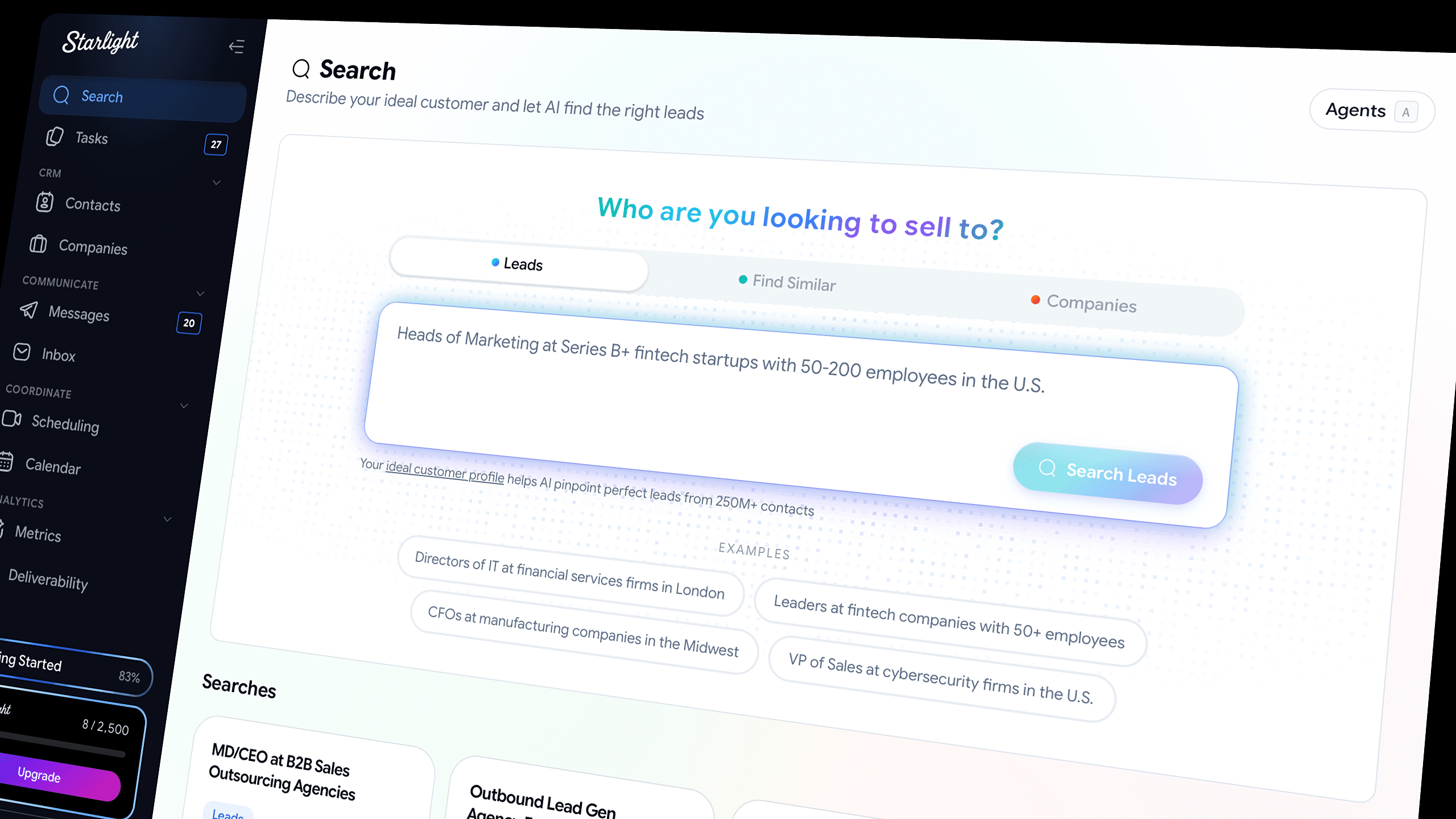
Describe the buyer. That's the setup. One sentence about who you're trying to reach. Starlight works out the searches, runs them, and keeps digging once the obvious results run out.
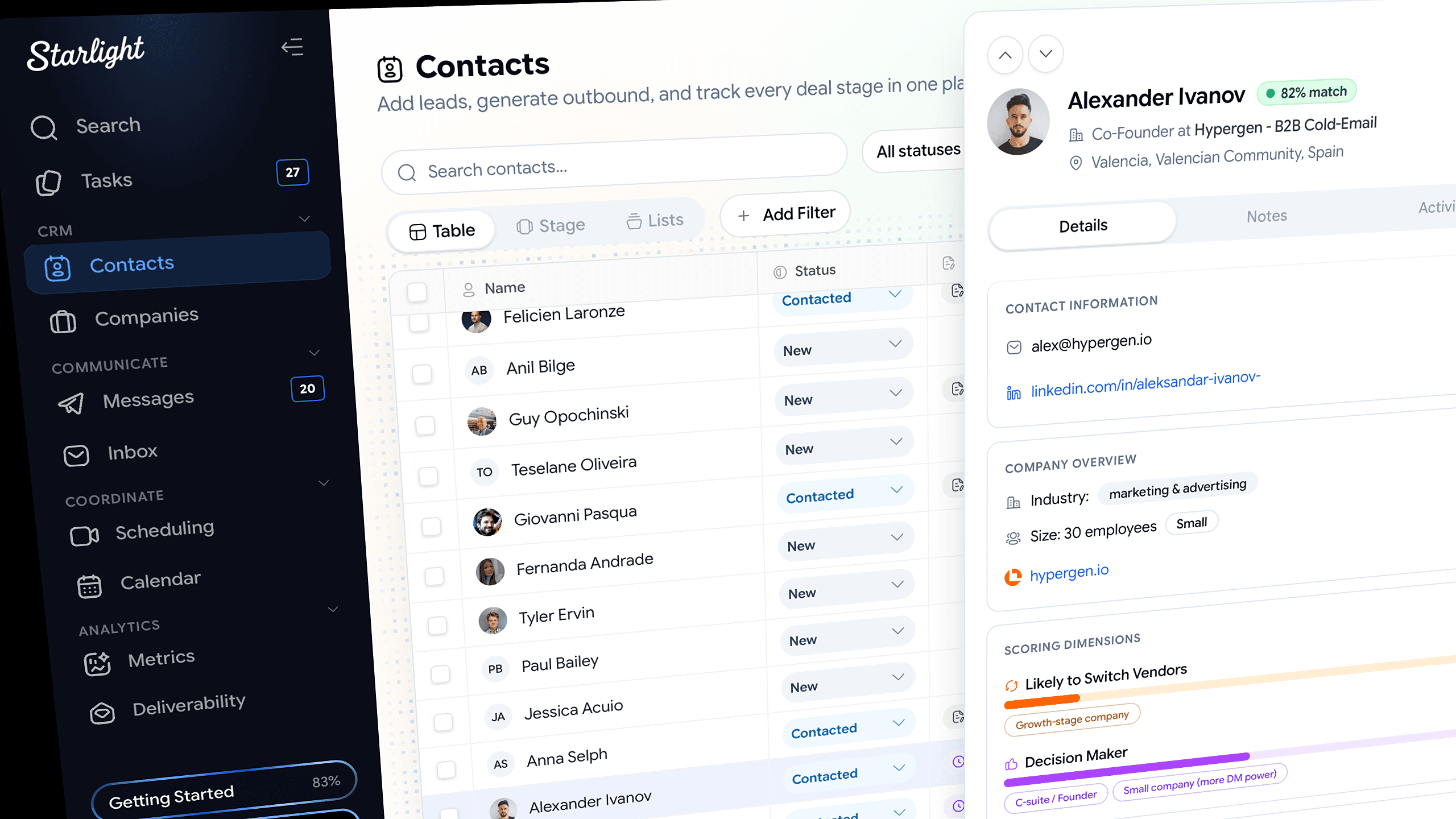
Bad-fit prospects never reach you. Everyone is scored against your ideal customer before you see them, with the reasoning shown. You spend your attention on the ones worth having.
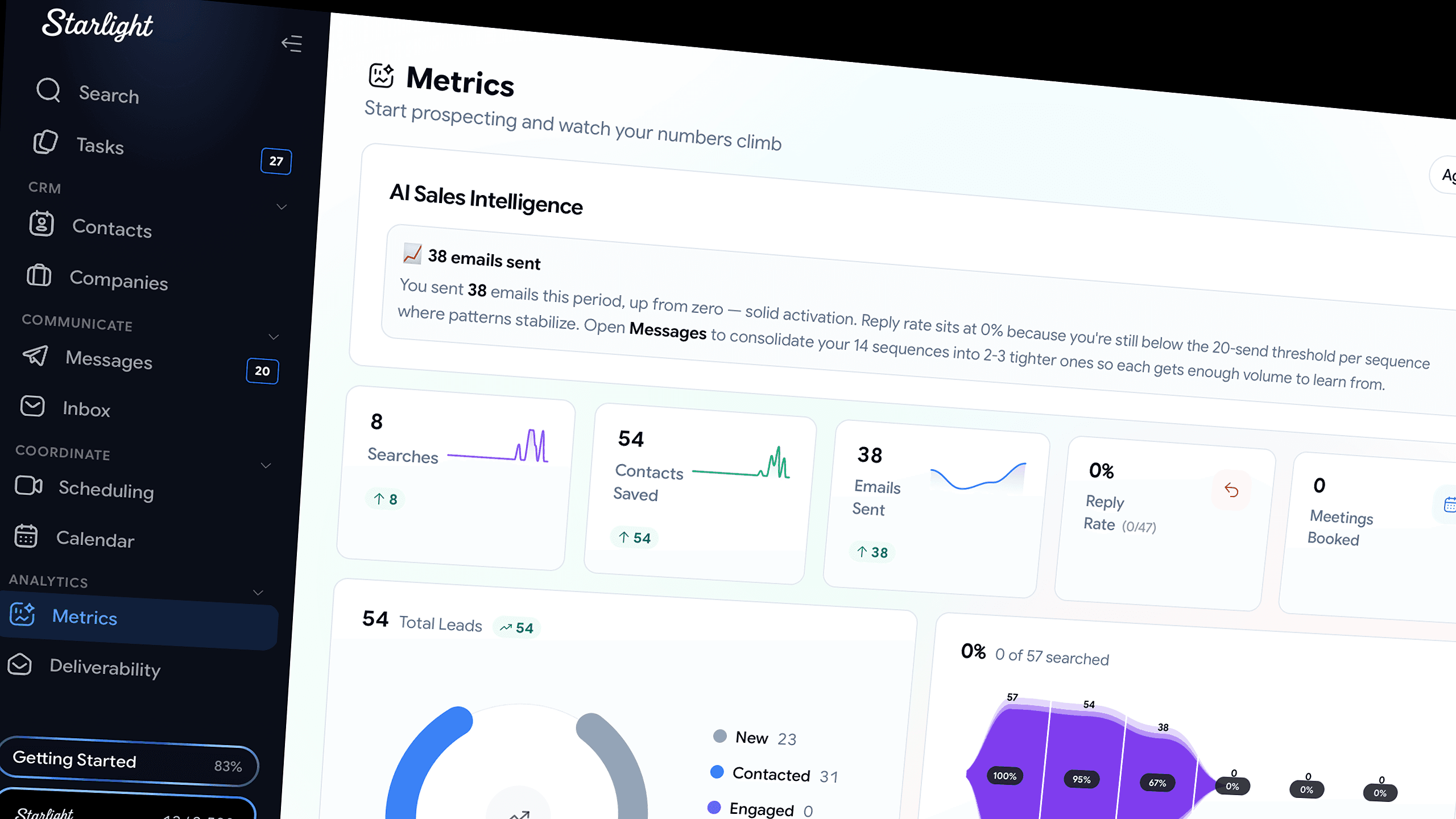
You'll know if it's working. Your numbers come with a plain-English read on what changed and what to do next, instead of a dashboard you have to interpret yourself.
AI outreach you'd put your name on.
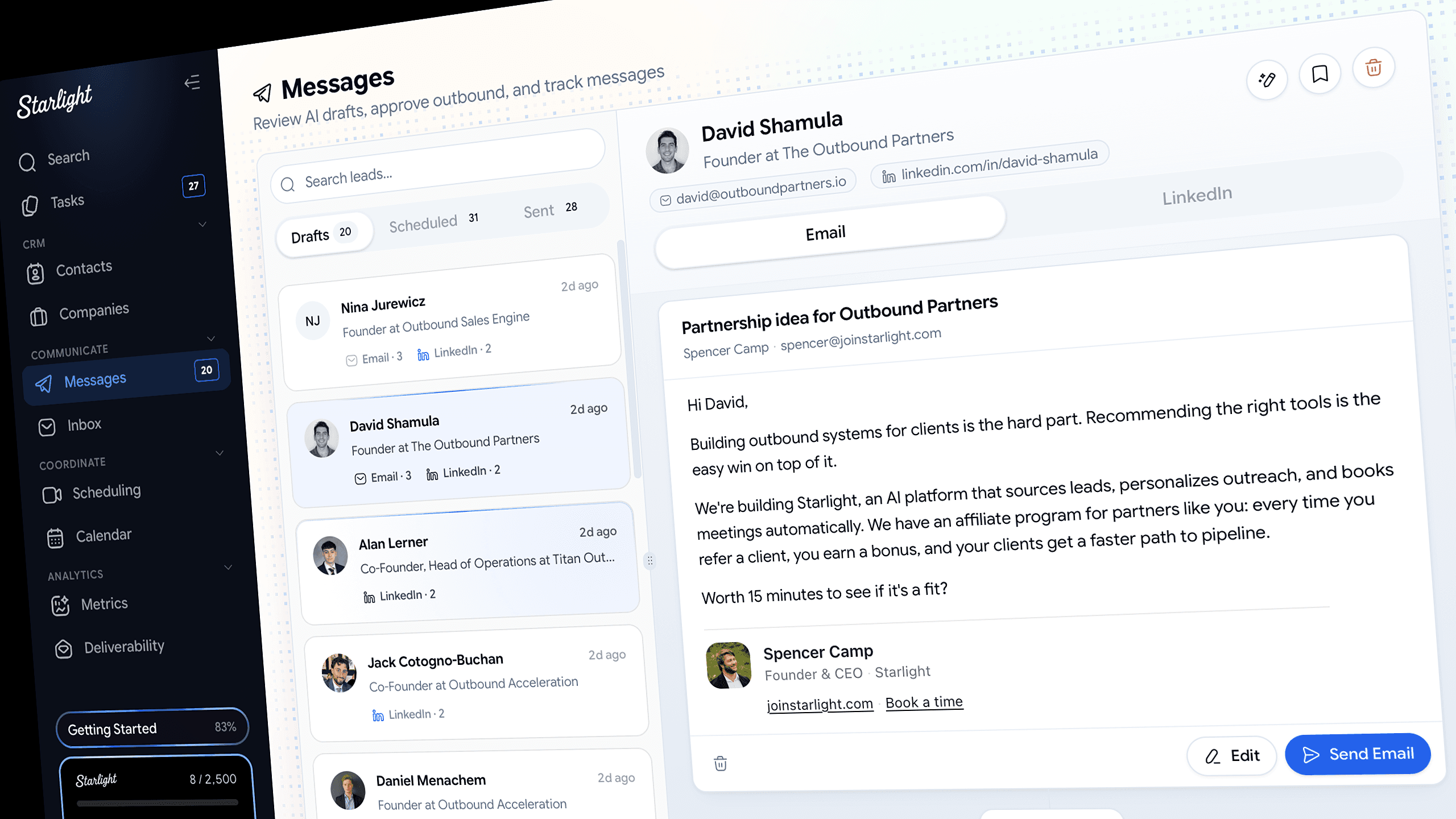
The worry with an AI sales agent is simple: what is it saying to people, and would you have said it? Starlight answers that by showing you. Every draft is graded before it reaches you, and the weak ones are rewritten automatically.
Grounded
Every claim traces back to something real about that person or their company. Invented details get caught.
Human
It has to read like you wrote it on a good day, not like a template with the gaps filled in.
On brief
It does what you actually asked for. Ask for a reply and it won't quietly push for a call instead.
What's left takes a few seconds each to approve, edit, or delete. Once an agent has earned it, you can let it send on its own.
Why you switch from Apollo.io
Apollo sells contacts. You still have to turn them into conversations. That means filters, lists, templates, sequences, and a calendar full of work that is not selling. A database is inventory. It is not pipeline.
Starlight sells the finished motion. One sentence about the buyer. An agent that searches, scores, researches, writes, and follows up. A queue of drafts you would actually send, each one graded before it reaches you. Tuesday becomes ten minutes of yes, edit, or delete.
If you wanted a bigger directory, you already have one. If you wanted meetings, start free and watch Starlight do the job Apollo leaves on your desk.
Read more: How Starlight's agents work·Usage-based pricing·Starlight vs Clay
Frequently
asked questions
See what it writes in ten minutes
Start free, describe your ideal customer, and read the sequence an agent comes back with. No credit card, no demo call, nothing to set up.
Other comparisons
View all comparisons →AI copilot for sales teams
Starlight vs Amplemarket
Starlight finishes the job and leaves send-ready drafts. Amplemarket only makes a rep faster.
CompareAI BDR (“digital employee”)
Starlight vs Artisan
Starlight does the BDR work and shows every line first. Artisan asks you to send unread.
CompareEnterprise AI SDR
Starlight vs 11x
The same AI SDR motion, live free in minutes — not an enterprise headcount contract.
Compare